.jpg)
Watching dolphins leap completely out of the water is impressive. Watching them deliberately launch themselves onto the shore to catch fish is something else entirely. Yes, you read that right. This fascinating dolphin behavior happens right here, and you can witness it during your stay on Seabrook Island, more specifically at Captain Sam's Inlet.
This hunting technique, known as dolphin strand feeding, is one of the rarest wildlife spectacles on Earth and unlike anything most people expect to see from wild dolphins.
In this blog post, I'll tell you everything you need to know about dolphin strand feeding at Captain Sam's Inlet so you can witness this one-of-a-kind spectacle during your visit.
A little hello before we start:
At Seabrook Exclusives, we've spent more than 40 years helping guests experience Seabrook Island the way locals know it best. Our collection of over 70 vacation rentals places you just moments from pristine beaches, maritime forests, championship golf, and all the island's epic adventures, with a local team always ready to help you make the most of your stay.
Visit our blog, where you'll find tips for first-time visitors, the best kids' activities, a pet-friendly vacation guide, and much more.
- Meet one of nature's most incredible hunting tricks: Learn what dolphin strand feeding is and how dolphins work together to catch fish by beaching themselves.
- Why does it happen at Captain Sam's Inlet? Find out why the inlet's unique geography creates ideal conditions for this extraordinary hunting behavior.
- Just how rare is it? Understand why only a small group of dolphins performs strand feeding and why it's considered one of the world's rarest wildlife spectacles.
- Why scientists call it dolphin culture: Learn how mothers teach calves this specialized hunting technique and meet some of the area's best-known dolphins.
- Keep an Eye on the Birds. They Know What's About to Happen: Spot the signs of an approaching feeding event by watching pelicans, skimmers, gulls, and jumping mullet.
- Where to watch strand feeding from Seabrook Island: Get step-by-step directions to the best viewing location at Captain Sam's Inlet.
- When is the best time to go? Time your visit around low tide and the peak months for the highest chance of seeing strand feeding.
Meet one of nature's most incredible hunting tricks
Strand feeding is a highly coordinated hunting strategy practiced by a small group of Atlantic bottlenose dolphins.
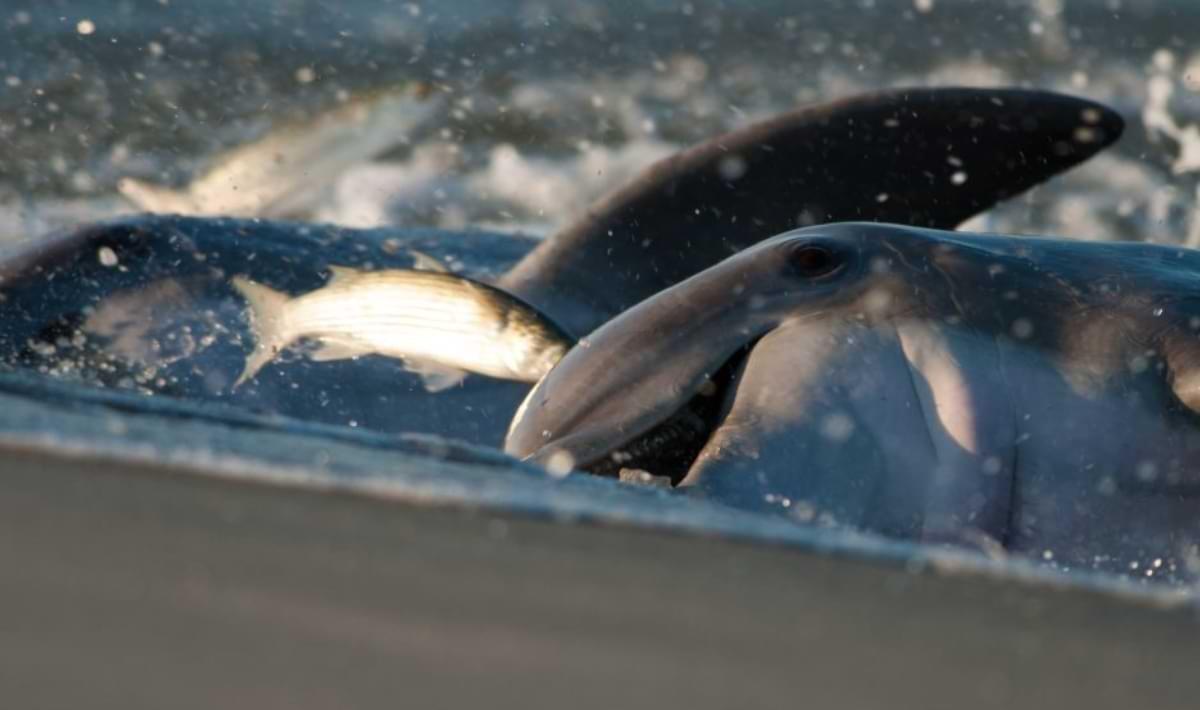
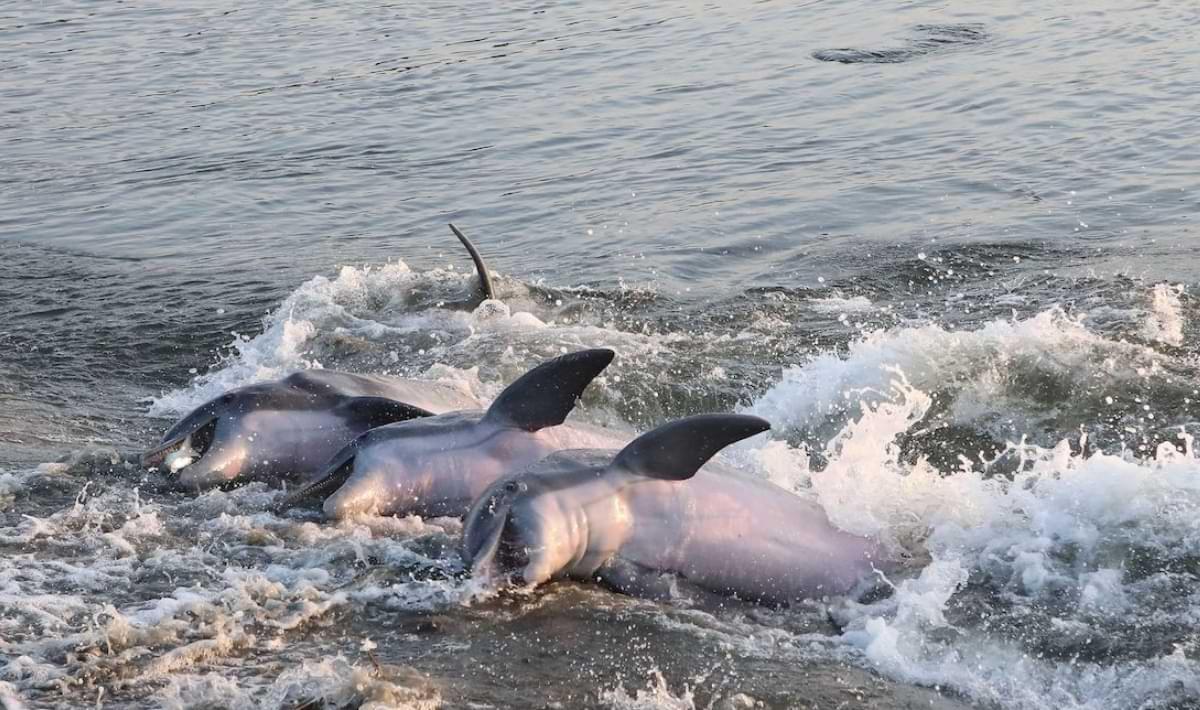
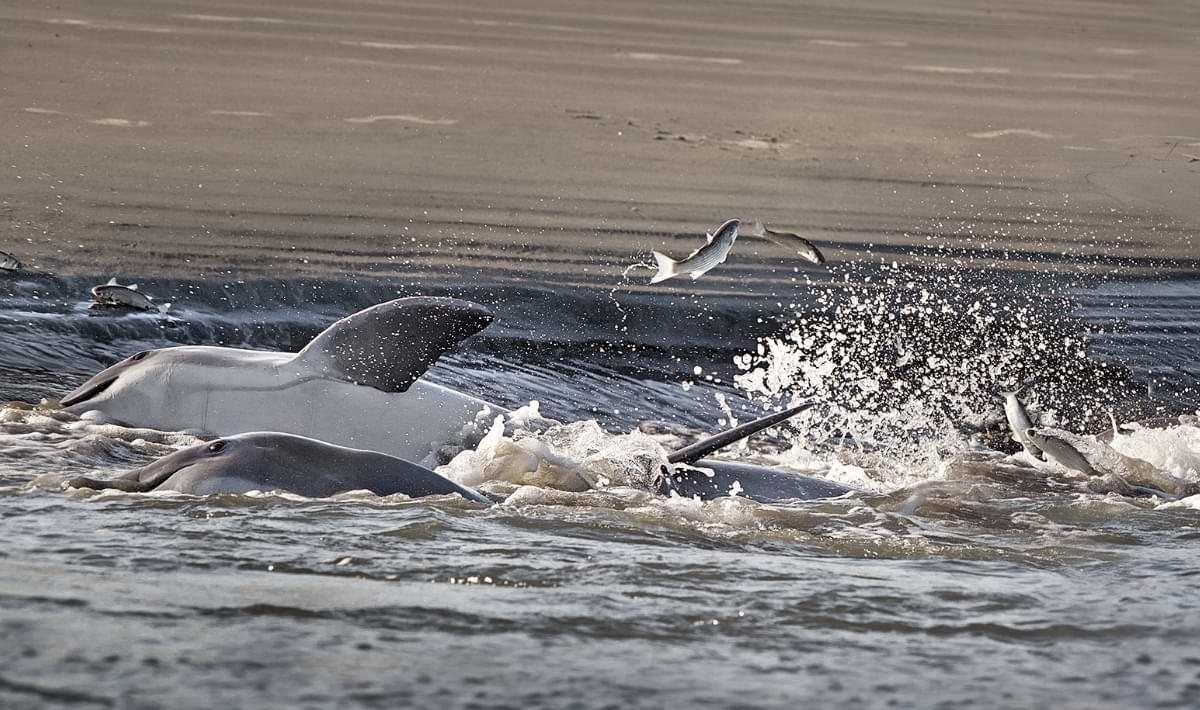
Here's how it goes: rather than chasing fish through open water, the dolphins work together to herd schools of striped mullet toward the shoreline. As the fish run out of water, the dolphins create a powerful wave with their bodies, pushing the fish onto mudflats or sandy banks. At exactly the right moment, the dolphins surge out of the water, briefly beach themselves to grab the stranded fish, then wriggle back into deeper water.
Why does it happen at Captain Sam's Inlet?
Captain Sam's Inlet, the channel separating Seabrook and Kiawah Islands, offers almost perfect conditions for this specialized hunting technique.
The shoreline has just the right slope. It's neither too steep nor too flat, allowing dolphins to slide onto the sand without injuring themselves. The inlet's tidal currents also funnel large numbers of baitfish into relatively shallow water, especially around low tide, making it much harder for the fish to escape.
In short, the geography does much of the work for the dolphins.
Just how rare is it?
Although strand feeding happens almost daily at Captain Sam's Inlet, it's still considered an exceptionally rare behavior. Only a handful of places along the coasts of South Carolina and Georgia regularly see it. What's even more interesting is that the behavior isn't instinctive. Dolphins have to learn it from their mothers.
Out of roughly 300 to 350 resident dolphins in the Charleston area, only about 12 to 15 regularly practice strand feeding.
It's also a risky strategy. Every time a dolphin throws itself onto the shore, there's a genuine chance it could end up stranded. Scientists often describe it as a high-risk, high-reward hunting technique.
Why scientists call it dolphin culture
One of the most fascinating aspects of strand feeding is that it's passed from one generation to the next.
Mother dolphins teach their calves how and when to strand themselves, creating what researchers describe as a form of animal culture. Young dolphins spend years observing before attempting the maneuver themselves.
Local researchers have even become familiar with individual dolphins. Among the best known are Koko, an experienced female strand feeder, her calf Kai, who has been learning the technique, and Step, an older female that often watches over younger calves while the others hunt.
Another mystery still puzzles scientists: these dolphins almost always land on their right side. Despite decades of observation, nobody knows exactly why.
One of the best ways to spot an approaching feeding event is to ignore the dolphins for a moment and watch the birds instead.
Brown pelicans, Black Skimmers, gulls, and several species of terns gather near the shoreline before the dolphins arrive. They know a feeding frenzy is coming and wait patiently for fish that escape the dolphins or are left behind on the sand.
If you notice birds getting unusually active, or mullet suddenly jumping frantically near the shoreline, there's a good chance dolphins are about to make their move.
One of the biggest perks of staying on Seabrook Island is having this extraordinary wildlife spectacle practically on your doorstep.
Head to Boardwalk 1 or Boardwalk 2 near Oyster Catcher Court. Once you reach the beach, turn left and walk toward the northern tip of North Beach.
The walk is roughly half a mile to one mile, depending on your starting point, and usually takes between 15 and 25 minutes. The farther you walk toward Captain Sam's Inlet, the better your chances of seeing the dolphins.
Once there, simply find a comfortable spot. Then all that's left is to wait for the show to begin.
The tide matters far more than the season. Plan your visit for two hours before to two hours after low tide. This four-hour window offers by far the highest chance of seeing strand feeding, with activity often peaking right around low tide itself.
When it comes to the time of year, late August through November offers the best chance of seeing strand feeding. This coincides with the annual mullet migration, when enormous schools of fish move through the inlets toward the ocean. At the same time, resident dolphins feed more aggressively to build up blubber before winter.
Late spring is another productive period, and strand feeding can be seen throughout the year if you time your visit around the tides.
Strand feeding demands enormous effort from the dolphins, so keeping your distance is essential. Federal law requires visitors to stay at least 15 yards (45 feet) away from dolphins while on land, and at least 50 yards away when viewing from a boat, kayak, or paddleboard. You can bring binoculars since you'll be watching from a respectful distance.
Never attempt to touch, feed, swim with, or approach the dolphins. Loud voices and sudden movements can also interrupt feeding behavior, so it's best to keep quiet while watching.
These simple precautions help ensure future visitors can enjoy the experience without disturbing the animals.
They're not essential, but they're highly recommended. Since visitors must stay at least 15 yards away from the dolphins, binoculars let you appreciate details like the dolphins coordinating their hunt, the fish scattering, and the birds joining the feeding frenzy. A pair of 8x42 or 10x42 binoculars is ideal for wildlife viewing.
Absolutely. It's one of the best wildlife experiences families can have on Seabrook Island. Just be prepared for a walk on the beach to reach the viewing area, bring plenty of water and snacks, and remind children to stay quiet and give the dolphins plenty of space.
Dogs are allowed on parts of Seabrook Island's beaches, but always check current beach regulations before heading out, as seasonal rules and leash requirements may apply. If you bring your dog, keep it well away from the dolphins and avoid letting it chase shorebirds or other wildlife.
The inlet is one of Seabrook Island's best wildlife-watching spots. Besides bottlenose dolphins, visitors often spot brown pelicans, Black Skimmers, several species of gulls and terns, egrets, herons, ospreys, and occasionally bald eagles. During warmer months, you may even see loggerhead sea turtles offshore.
No. These are wild dolphins, and every sighting depends on natural conditions. Timing your visit around low tide during the peak season improves your chances, but patience is part of the experience.
Yes, and Captain Sam's Inlet is one of the best places in the country for dolphin photography. A telephoto lens or a camera with a good zoom will help you capture the action while maintaining the legally required viewing distance. Avoid using drones, as they can disturb wildlife and may be prohibited in the area.

Seabrook Exclusives offers an incredible collection of vacation rentals, many with access to Seabrook Island Club amenities, including oceanfront pools, fitness facilities, and on-island dining. Pair that with more than four decades of local knowledge, and you'll have everything you need for a relaxing Lowcountry escape.